Crypto Casino Licenses Explained: Curaçao vs Anjouan vs Tobique
Once people hear the term crypto casino license they oftentime think that this means the casino has some special type of permission to operate specifically with BTC, USDT and other cryptocurrencies. However, in reality that is not how things work.

 Advertising transparency
 The casino reviews and recommendations on Kryptocasinos.com are independent and transparent. This helps users worldwide make well-informed decisions when choosing the right online crypto casino.
To this end, we research current casino data, process it objectively, and offer users interactive features such as filters and comparison tables. This allows readers to conduct their own research free of charge, compare our content and the casinos, and make their own decisions on this basis.
We may generate revenue when readers register at one of the casinos.
We have imposed strict editorial guidelines on ourselves and explain our testing methods openly and comprehensively. We also communicate transparently how our work is financed. This site may contain tracking links, but this does not influence our objective view in any way.
Reading time: ~ 6 minutes
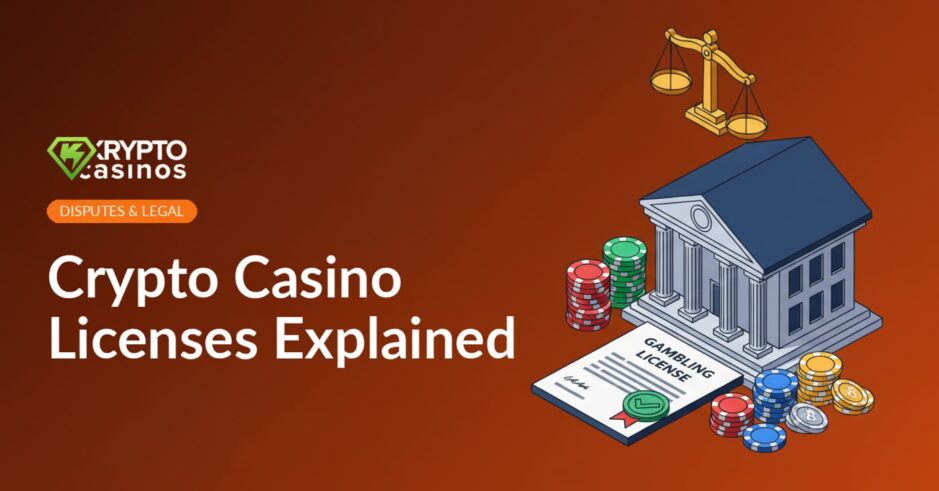
Crypto casino license is definitely not a separate crypto permission, but what it does – it actually determines whether a certain gambling operator is legally authorized to offer the casino services from a certain jurisdiction, what rules they must follow as well as how credible that authority looks to banks. And honestly that matters a lot.
That's because even if a certain casino operates with crypto mainly, it still relies on a lot of different third parties in the background. And these can include payment processors, stablecoin issues, exchanges, some fraud monitoring tools and even banking partners. If for some reason the license looks confusing or weak, these partners might refuse to work with the casino or just close the accounts later on.
When you compare these three licenses it doesn't really matter where the license basically comes from. What actually matters much much more is how trustworthy that license is.
Curaçao
If we take a look historically, we’ll see that Curaçao has been the most widely used license in the crypto casino industry. And for many years this license was considered as a weak one however this has changed after the recent reforms.
So Curaçao has also strengthened the AML and the compliance expectations where the operators have to implement transaction monitoring as well as suspicious transaction reporting. Then another area that became more structured is responsible gambling – this framework basically includes self-exclusion requirements and it expects operators to provide dispute resolution options for players.
In fact there are also infrastructure requirements that some operators find really demanding. For instance, some certain important records about the players and the transactions have to be accessible to the regulator through the infrastructure that is located in Curaçao.
What this actually means is that the license is definitely becoming way more demanding compared to the past. However, it also means that the jurisdiction is moving through a much more credible regulatory model.
Anjouan
Another jurisdiction that is oftentimes present in the crypto casino industry is Anjouan, and that is mainly because it is basically promoted as a fast and flexible licensing option.
One important reason why operators are considering Anjouan is the offshore environment. That is because international business companies might benefit from tax exemptions on income from outside the country which can make it more attractive financially.
However, compared to the Curaçao license the rules that are publicly visible are less detailed. For example, things like RNG testing, hosting rules or strong protection of player funds are not actually always clearly explained in the information that people usually find.
Next, this jurisdiction has also been mentioned in several industry discussions where some operators were reported because they have incorrectly claimed the Anjouan licenses. And because of this some platforms or service providers sometimes take additional time to verify the actual licensing information.
Overall, Anjouan is oftentimes viewed as a licensing option that offers operational flexibility, while at the same time requiring operators and partners to pay closer attention to verification and compliance processes.
Tobique
Tobique is a relatively new licensing option and it works quite differently compared to the other offshore jurisdictions.
One very interesting feature of this Tobique legislation is that it explicitly includes digital assets in the definition of money, and this means that cryptocurrency payments are directly recognised within their framework which is something that many other gambling laws don’t really clearly mention.
And another notable aspect is that the regulatory codes are very fairly detailed. That’s because the Tobique framework includes requirements for ID verification, AML compliance as well as responsible gambling tools.
These rules also require RNG fairness testing by approved laboratories and do expect the operators to maintain certain security measures. Additionally, the regulator itself maintains a public list of several license holders as well as a list of websites that just misuse the Tobique name.
At the same time the legal context around the license is still relatively new. The thing is, the Tobique framework says that the legislation applies within its territory and sometimes has priority over other laws which is why there is still debate about how it would work together with the Canadian law if a conflict ever happens.
Because of this evolving legal positioning, some financial institutions or payment providers may basically choose to conduct additional compliance checks before working with operators licensed under the regime.
Overall, Tobique is often seen as a system that includes clearer operating rules and directly recognises digital assets. At the same time, its legal position within the wider Canadian system is still developing.
Quick Comparison Table
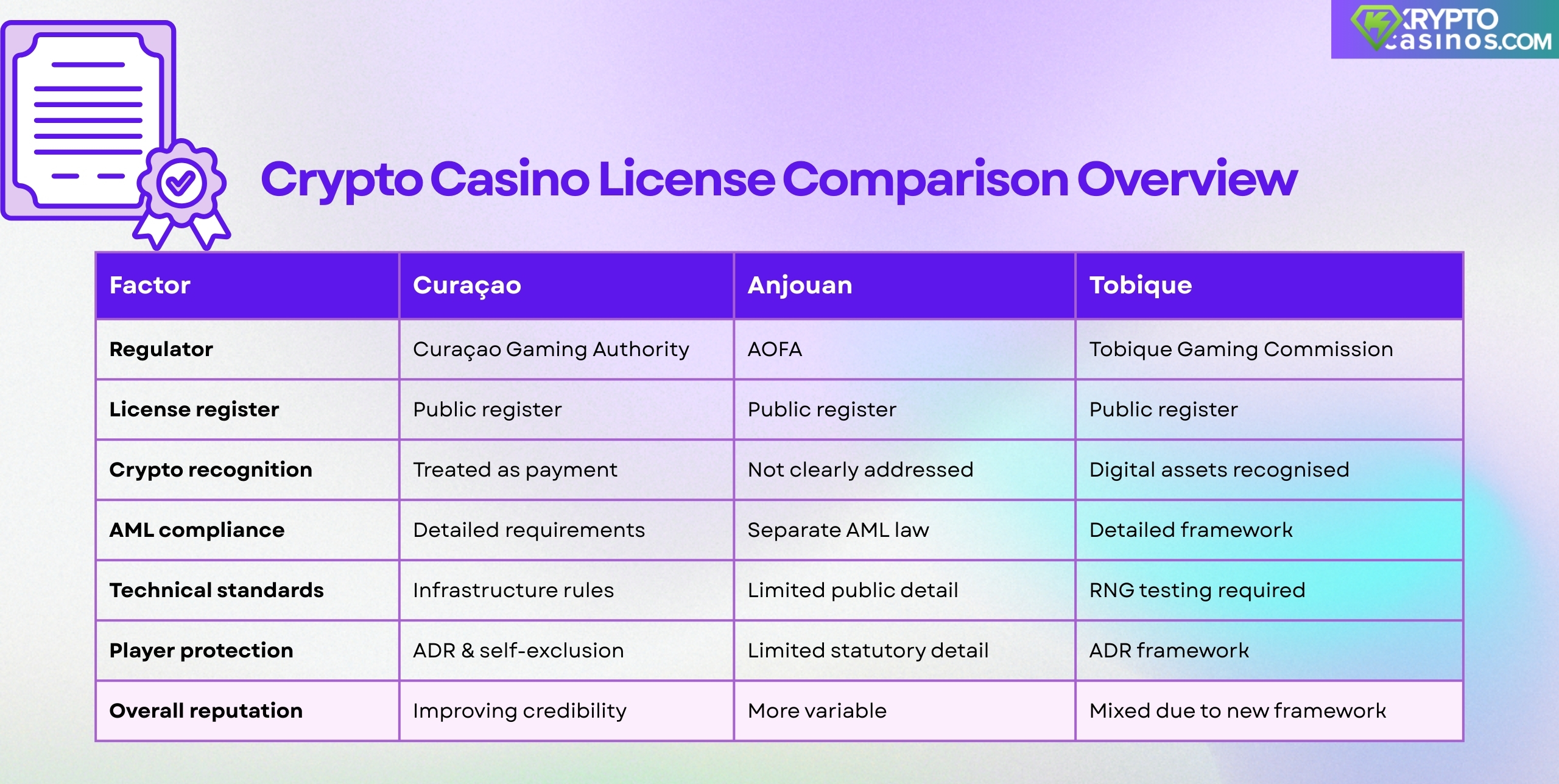
Which License is The Strongest?
So when the operators are evaluating these licenses, the decision eventually comes down to three things: balancing speed, credibility and finally, flexibility.
Curaçao for instance is offering the most balanced option currently because their regulatory system has become much more transparent and structured. They have license registries as well as detailed AML expectations which definitely helps to create much more trust with their financial partners.
On the other hand Anjouan can definitely offer much faster and flexible offshore licensing, however due to their slightly lower level of public transparency, they can make the payment relationships a bit more challenging.
And finally we have Tobique that is presenting us a fresh new alternative because as we said, it directly recognizes the digital assets. However, the way this framework actually interacts with Canadian gambling law is definitely still a subject to interpretation, which means operators typically review this aspect before deciding to operate under the license.
Conclusion
When you start comparing these three licenses what matters most is how easy it is to verify the casino that you are playing at as well as what realistically can happen if something goes wrong later on.
So back to our licenses. The first one is Curaçao – and it is worth noting that this one is the easiest one to verify because of its certificate system as well as the public license register. Next one, we have Anjouan which definitely provides verification tools however the overall oversight about the framework is a little bit uncertain. Finally there is the Tobique license which really looks very strong on paper especially when it comes to crypto casino withdrawals, however the broader legal recognition is still totally new.
And precisely because of that the safest approach for you is very simple. You need to always verify the casino domain through the official license tools, assume that identity checks will eventually happen and always try to perform a small withdrawal before withdrawing larger balances.
Disclaimer: This website is for informational purposes only and does not constitute legal advice. Winnings are not guaranteed. Gambling can be addictive. Only play where legal in your region and check your local laws. Please gamble responsibly. | 18+
Sources
- Anjouan Gaming. "THE COMPUTER GAMING LICENSING ACT 007 OF 2005". Accessed on 16.03.2026. https://anjouangaming.com/wp-content/uploads/2023/06/Gaming-act-2005.pdf.
- Tobique Gaming Commission. "TOBIQUE GAMING ACT 2023". Accessed on 16.03.2026. https://thetgc.ca/wp-content/uploads/2025/03/Tobique-Gaming-Act-2023.pdf.
- The Curaçao Gaming Control Board. "Online Gaming". Accessed on 16.03.2026. https://www.cga.cw/regulation/online-gaming.