Layer 2 Blockchain and Crypto Casinos
Layer 2 blockchain solutions are basically making crypto casinos much more practical by moving most of the activity off the base solution, but still relying on Layer 1 security. So instead of recording all your bets or spins or playing directly with BTC/ETH, the L2 networks are processing activity much more efficiently and then send the results back to the main chain. The benefits of this are basically reduced costs, increased speed as well as making small transactions feasible.

 Advertising transparency
 The casino reviews and recommendations on Kryptocasinos.com are independent and transparent. This helps users worldwide make well-informed decisions when choosing the right online crypto casino.
To this end, we research current casino data, process it objectively, and offer users interactive features such as filters and comparison tables. This allows readers to conduct their own research free of charge, compare our content and the casinos, and make their own decisions on this basis.
We may generate revenue when readers register at one of the casinos.
We have imposed strict editorial guidelines on ourselves and explain our testing methods openly and comprehensively. We also communicate transparently how our work is financed. This site may contain tracking links, but this does not influence our objective view in any way.
Reading time: ~ 7 minutes
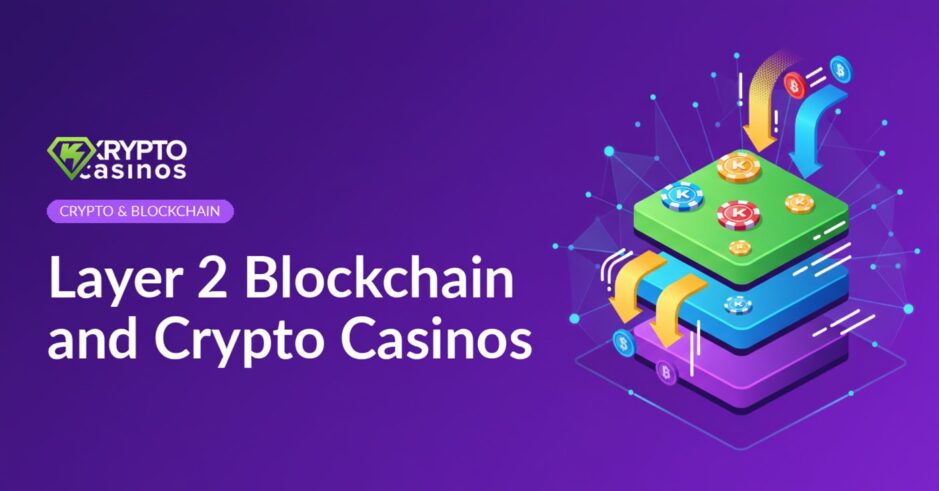
And for crypto gambling this definitely means a lot because casino activity depends on rapid deposits and withdrawals. On Layer 1 the fees and the congestion can make this expensive and slow, however, on Layer 2, players can basically place their bets almost instantly and with very low transaction costs. So Bitcoin’s Lightning Network basically allows you rapid micropayments while Ethereum rollups batch many transactions together before posting them on-chain. And this makes low cost withdrawals and real time gaming practically much more realistic.
It’s worth noting that L2s can also improve transparency because the casino logic can run through smart contracts and randomness so it can be definitely sourced from systems like Chainlink VRF.
Anyways, L2 casinos are not really risk free. The cross chain bridges are still basically a major weak point and transaction manipulations are still possible. Then on top of that you have gambling laws which practically vary heavily by jurisdiction and then the operators need to navigate the licensing as well as AML and KYC requirements very carefully.
Layer 1 vs Layer 2
Layer 1 blockchains like BTC and ETH are basically secure but they can cause delays because they are slow and also they are expensive if the demand is high. On the other hand, Layer 2 networks work on top of these networks by handling the transactions in a cheaper and faster way and then they are sending a summary of that particular transaction back to the main network for a final confirmation.
And honestly, for casinos this can matter a lot. Instead of you paying full blockchain fees for every single action, your bets can be grouped together. So that will lower the cost per transaction and can definitely improve speed.
So in simple terms Layer 1 casinos are sort of limiting when it comes to cost while Layer 2 casinos are much faster and cheaper.
Main Layer-2 Models for Casinos
So different Layer 2 models work in slightly different ways and each one of them has its own pros and cons. Below we list the most popular ones.
State Channels
These are allowing the users to basically make transactions off the main blockchain and to only record the final result on it which makes them very fast and cheap, however, they practically work best for a smaller group of users. An example for this is Bitcoin’s Lightning Network.
Optimistic Rollups
Then we have optimistic rollups which are actually grouping multiple transactions and sending them to Ethereum. They really are secure and very easy to use, however the withdrawals might take up to several days.
ZK Rollups
These ones also group the transactions together and use special proofs to confirm that everything is valid and correct right away. And that really makes them faster and more private however they are much more complex and still quite new.
Sidechains
Finally we have sidechains like Polygon for example which run on their own systems and their very own validators. It’s worth noting that these are very very fast and cheap, however they don’t really rely on the main blockchain security and that means that more trust is definitely needed.
How Layer-2 Helps Crypto Casinos
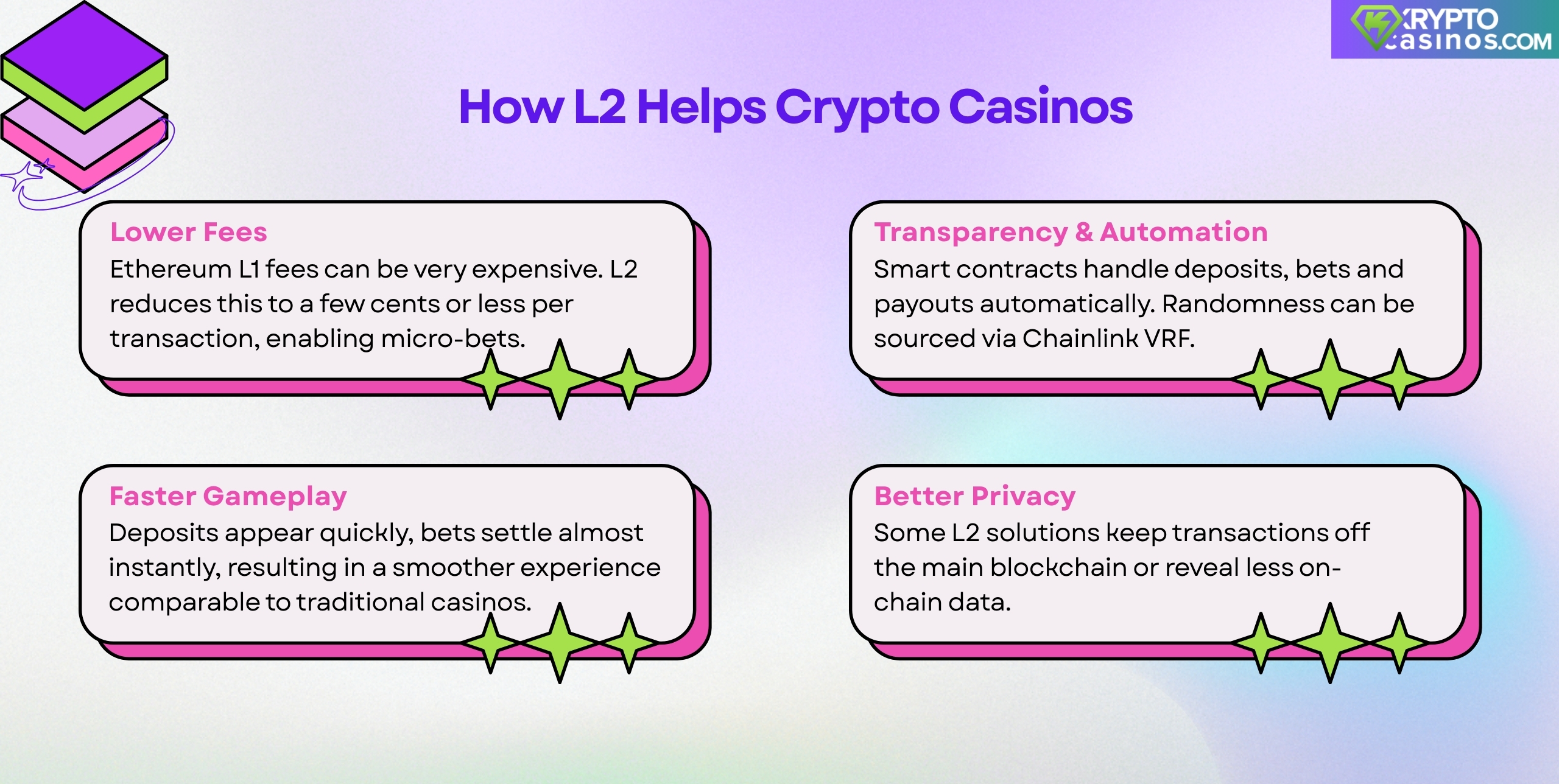
As we previously mentioned, one of the biggest advantages of Layer 2 networks are the lower fees. For instance, on Ethereum one single transaction can be very expensive, however on Layer 2 that cost is very low, usually just a few cents or sometimes even less. And this can definitely allow for more flexibility when it comes to gameplay.
Then another huge benefit is the speed. That’s because the deposits show up much faster and the bets settle quicker and that results in a smoother game play overall.
What’s also worth mentioning is that Layer 2 also improves transparency + the automations. The smart contracts can handle deposits as well as bets and payouts automatically without actually needing the casino to process everything manually. And this really makes the system much more reliable and easier to verify as fair.
There are also some Layer 2 solutions that offer much better privacy. So certain transactions can actually stay off the main blockchain or simply just reveal less information. Not all of the platforms are using this yet but it’s still important that the technology allows it.
And finally, many Layer 2 networks are working very well with crypto wallets, tokens and apps. This actually makes it much easier for casinos to manage payments, rewards and the overall user experience.
Examples of L2 Casino Platforms
Now let’s see how this really works in practice. Below we list the most common Layer 2 casino platforms.
Arcadeum
So this one is basically built on Arbitrum and focuses on on chain betting with USDT. It is very easy to use due to its transparency and it’s also very cheap. However, the only downside is that the withdrawals might actually take a bit longer.
APT Casino
This one also runs on Arbitrum and it’s a bit more experimental since it basically mixes casino games with social features like chat and live streaming.
JackpotX
Next, we have JackpotX that runs on zkSync which is a ZK rollup. Oftentimes, it offers low fees as well as fast transactions that makes it the perfect good example of a newer Layer 2 technology.
Lightning Casinos
And these ones are proof that the smart contracts are not actually the only one route. That’s because through Bitcoin payment channels users can place fast bets with minimal costs especially for simple games like dice.
Polygon Based Casinos
Finally, we have Polygon based casinos which are very common since Polygon offers low fees and it’s easy to use.
Security Risks
Even though Layer 2 casinos have a lot of benefits, they are not risk free. And the bridge is the biggest concern most of the time. So moving funds between chains actually introduces an extra attack surface and many of the biggest crypto losses historically do come from bridge failures.
Optimistic rollups can definitely make the transactions slower since users might need to wait several days to move the funds back to the main network. Indeed this can be a little frustrating and can create some liquidity problems for the casinos.
Another risk is the risk of transaction manipulation. So what can basically happen is that the transaction can be reordered by the network and that might affect outcomes or create unfair outcomes. On top of that, smart contract bugs are still a major risk, especially when large amounts of money are involved.
Regulation and Compliance
So crypto casinos do operate in a grey area in many markets and Layer 2 infrastructure won’t remove that problem.
Across the EU for example, rules are different by country, however KYC and AML obligations still apply. Malta does allow crypto gambling under regulated conditions while Curaçao has become much more stricter. In the US on the other hand, most of the only casino activity is restricted and depends on the state.
Anyways, the key point is simple. Layer 2 casinos would still need licensing where required as well as strong KYC processes and controls around suspicious activity.
The legal side is complicated. Crypto casinos already operate in a grey area in many markets, and Layer-2 infrastructure does not remove that problem.
UX, Custody, and Liquidity
From your side as a player the Layer 2 casinos oftentimes feel just like the other crypto apps. You connect a wallet, bridge your funds if necessary and basically bet directly through the interface itself. And if it is designed well, the user experience can definitely feel as smooth as a traditional online casino.
Also, the custody models do vary. For example, in a non custodial setup you keep control of your funds in your own wallet until the bet is placed. Then in non custodial or hybrid setups for example the platform might manage the balances more like a conventional casino account. And yes, they are definitely more transparent however they are more complex.
And finally liquidity also matters a lot. Some platforms let token holders to fund the house or simply provide shared liquidity pools. However, this can create problems if many players win at the same time, as the pool might struggle to cover all payouts.
Conclusion
Layer 2 infrastructure does solve most of the biggest issues in the crypto gambling scene such as fees, speed and scalability by making on-chain gaming more usable especially for frequent and small bets.
Anyways, at the same time Layer 2 casinos are exposed to a bridge risk as well as smart contract flaws and withdrawal delays. The technology behind is still really strong, no doubt about that, however the success of this sector depends on how well the operators are managing security and compliance.
At the same time, L2 casinos are still exposed to bridge risk, smart contract flaws, withdrawal delays, and regulatory pressure. So while the technology is strong, the success of this sector depends on how well operators manage security, compliance, and user trust.
Finally, the long term outlook looks really promising – faster exit system and cross chain betting could make Layer 2 casinos even more competitive. However the platforms will likely be the ones that actually combine low cost infrastructure with clear fairness and serious compliance standards.
Disclaimer: This website is for informational purposes only and does not constitute legal advice. Winnings are not guaranteed. Gambling can be addictive. Only play where legal in your region and check your local laws. Please gamble responsibly. | 18+
Sources
- Ethereum. "What is layer 2?". Accessed on 19.03.2026. https://ethereum.org/layer-2/learn/.
- Gambling Commission. "Blockchain technology and crypto-assets". Accessed on 19.03.2026. https://www.gamblingcommission.gov.uk/licensees-and-businesses/guide/page/blockchain-technology-and-crypto-assets.