Can Crypto Casino Transactions Be Reversed?
Crypto casino payments are more or less final. Once your transfer is on the blockchain and it has a certain amount of confirmations, there is no mechanism that could reverse it in the way banks and credit cards can. And some people would definitely assume that there has to be a way, but the reality is-there isn’t.

Our reviews are independent. We may earn a commission if you register with a casino through our links. This does not influence our ratings.
Reading time: ~ 5 minutes
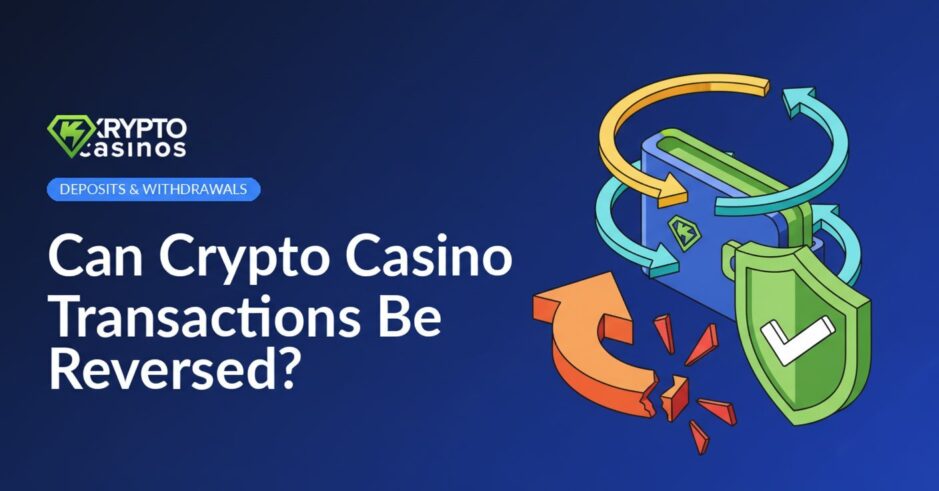
Any “reversals” that happen, happen off-chain, not on the blockchain. And most of those casinos do operate custodially, which still seems confusing to many players. When you deposit, you are giving them money to wallets the casinos themselves own.
The blockchain part might be final, but it’s them who will decide if you get your money back and your withdrawal goes through. And knowing and also understanding this matters more than you’d think.
On some occasions, there are legitimate ways to get the money back through regulators, courts, and chargebacks. If a withdrawal gets stuck or delayed, you still have escalation paths available; we explain the full process in our guide on what to do when a crypto casino won’t pay out. But it’s really important for you to understand that the blockchain transaction itself stays exactly as it is.
Blockchain Finality in Simple Terms
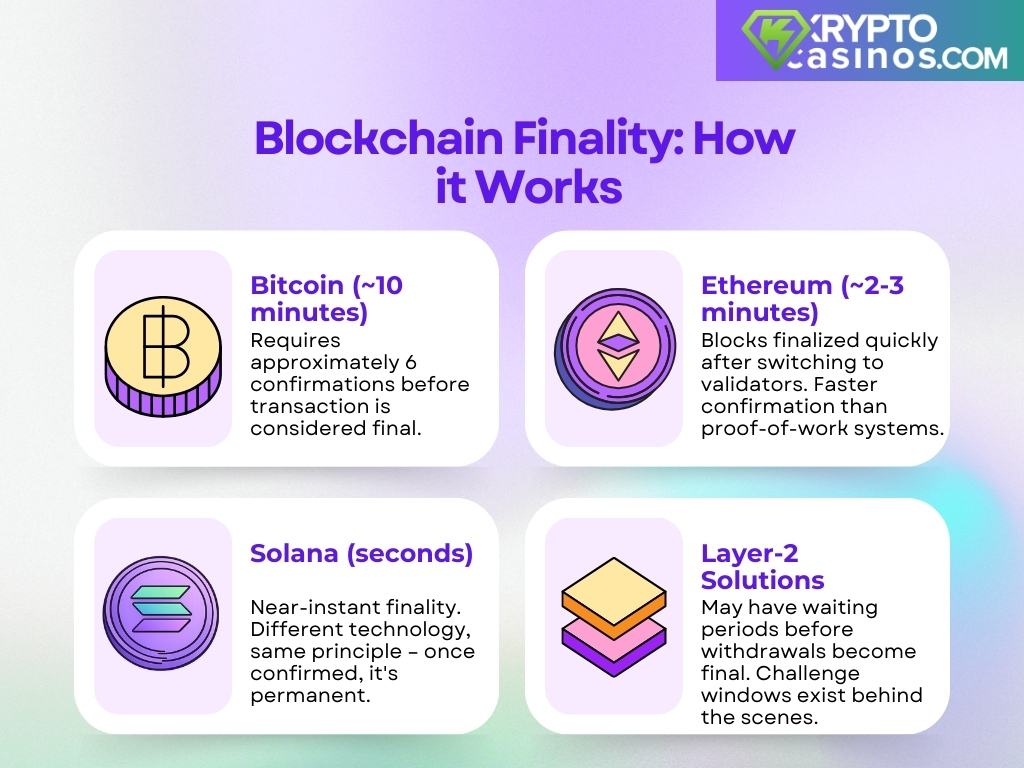
Blockchain technology doesn’t really have this big “final” stamp that just appears out of nowhere. It’s more like this feeling that consolidates over time. It’s more like confidence growing over time. Each new block makes the previous ones harder to change.
Bitcoin is a pretty well known example. It takes around 6 confirmations before the transaction finally settles and it’s final. Could it still be undone at that point? Technically yes. Will it be? Very much unlikely.
Ethereum has (mostly) switched to validators instead of miners by now. Blocks get finalized much quicker, after a couple of minutes usually. Solana is even faster. Seconds, basically. But still: different technology, same end result. Once that transfer is through, it’s through and it’s not going anywhere.
Layer 2 solutions add a slightly new twist, because some of them need a waiting period before a withdrawal becomes really final. This often leads to users being confused, because they see the transaction going through but there’s still a challenge window behind the scenes.
How Reversals Can Still Happen
While the transactions are final, there are a few ways in which a particular transaction can be made invalid, and there are a few examples of this. The most well-known is the 51% attack, where an entity controlling the majority of the network power could rewrite recent history and double-spend funds. This is unrealistic on the large chains but has happened on smaller networks.
Another is the zero-confirmation double spend, where a casino will credit a deposit before it has been confirmed. Modern casino platforms mitigate this risk by simply requiring confirmations, and in general, smart contracts mitigate a lot of this. If the casino is using admin keys, or upgradeable contracts though, those privileges might be abused to freeze or slurp funds.
But the reality is that most of these reversals happen off-chain as mentioned previously. Since the casinos are the ones who control the funds you have safely deposited, they can also cancel or delay the withdrawals internally. The blockchain record remains unchanged, but the outcome for the player can still change.
Custodial vs Non-Custodial Casinos
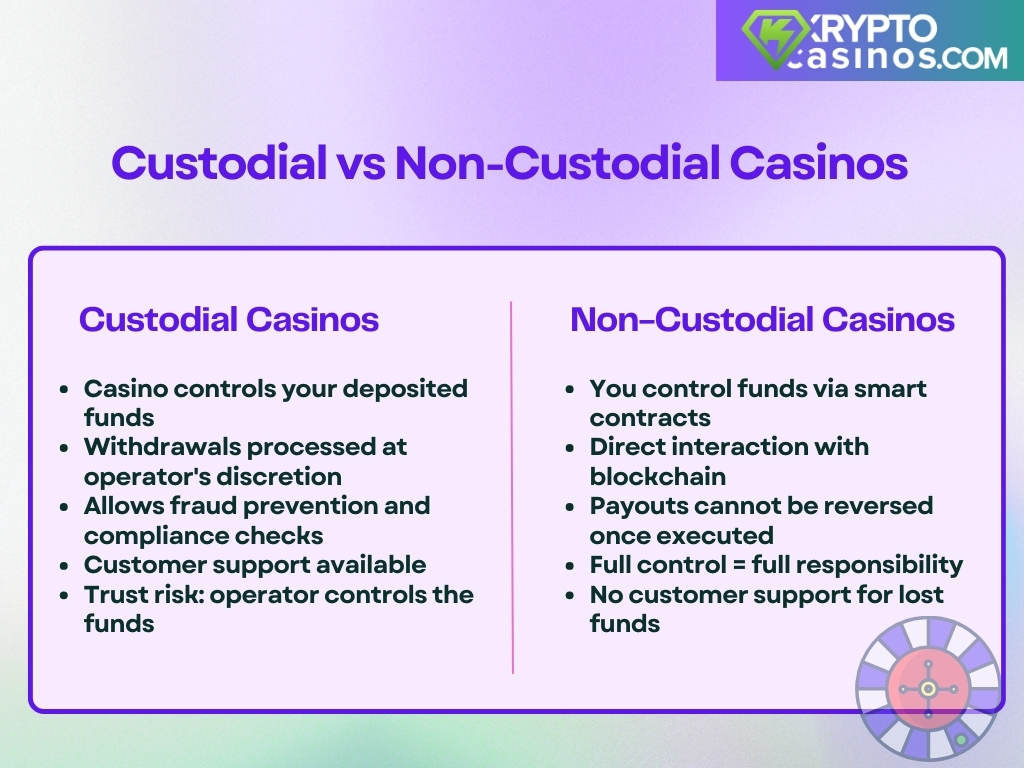
Custodial casinos function similarly to crypto exchanges where the deposits are sent to wallets controlled by the operator, and withdrawals are processed at the casino’s discretion. This particular model allows fraud prevention and compliance checks but it also introduces a trust risk.
But non-custodial casinos work quite differently where players can directly interact with the smart contracts. In that way they are keeping control of their funds until their bets are placed. And once their payouts are executed they can’t basically be reversed. The trade-off is that players must manage their own security and cannot rely on customer support if something goes wrong.
Long story short, it is worth mentioning that wallet architecture matters in both of the models. Casino operators usually would combine hot wallets for daily activity with cold wallets for reserves, using multi signature steps in order to reduce the risk.
Legal and Regulatory Options
Again, the blockchain transactions can’t definitely be reversed, however casino players are not completely left without an alternative. For instance, if a deposit involves a credit card or bank transfer, the original fiat transaction may still be disputed and courts and regulators have as well forced casinos to pay those withheld winnings in several cases.
AML and KYC frameworks add another layer. Authorities can freeze funds at exchanges or custodial services, creating indirect paths to recovery even when the blockchain transaction remains permanent.
Blockchain is final, but other paths exist:
- Credit Card/Bank Disputes: Original fiat transaction may still be contested
- Regulators & Courts: Have forced casinos to pay withheld winnings in several cases
- AML/KYC Frameworks: Authorities can freeze funds at exchanges or custodial services
- Chargebacks: Available for deposits involving traditional payment methods
Preventing and Handling Disputes
From a player perspective, prevention is crucial. Verifying deposit addresses, waiting for confirmations, testing withdrawals with small amounts, and keeping detailed records all reduce risk. If a withdrawal stalls, escalation should happen quickly through support channels, regulators, or legal routes.
Operators reduce disputes by publishing clear confirmation and withdrawal policies, securing funds in cold storage, monitoring fraud, and maintaining transparent complaint procedures.
Final Thoughts
Crypto casino transactions are almost impossible to reverse on-chain across major networks. The only realistic “reversal” mechanisms happen through operator actions, legal pressure, or fiat payment disputes.
In practice, crypto gambling works best when both players and casinos treat transactions as final and focus on prevention, transparency, and clear dispute processes.
We have imposed strict editorial guidelines on ourselves and explain our testing methods openly and comprehensively. We also communicate transparently how our work is financed. This site may contain tracking links, but this does not influence our objective view in any way.
Sources
- UNLV. "An assessment of AML risks linked to accepting crypto-payments in the gambling sector". Accessed on 16.02.2026. https://www.unlv.edu/sites/default/files/media/document/2024-02/ICGR-Research-AML-Crypto-in-Gaming-Sector.pdf.
- CryptoSlate. "Five most prolific 51% attacks in crypto: Verge, Ethereum Classic, Bitcoin Gold, Feathercoin, Vertcoin". Accessed on 16.02.2026. https://cryptoslate.com/prolific-51-attacks-crypto-verge-ethereum-classic-bitcoin-gold-feathercoin-vertcoin/.
- CCN. "Circle’s Reversible Transactions Proposal Chases Mainstream Appeal". Accessed on 16.02.2026. https://www.ccn.com/news/crypto/circle-reversible-transactions/.