What to Do When a Crypto Casino Won’t Pay Out
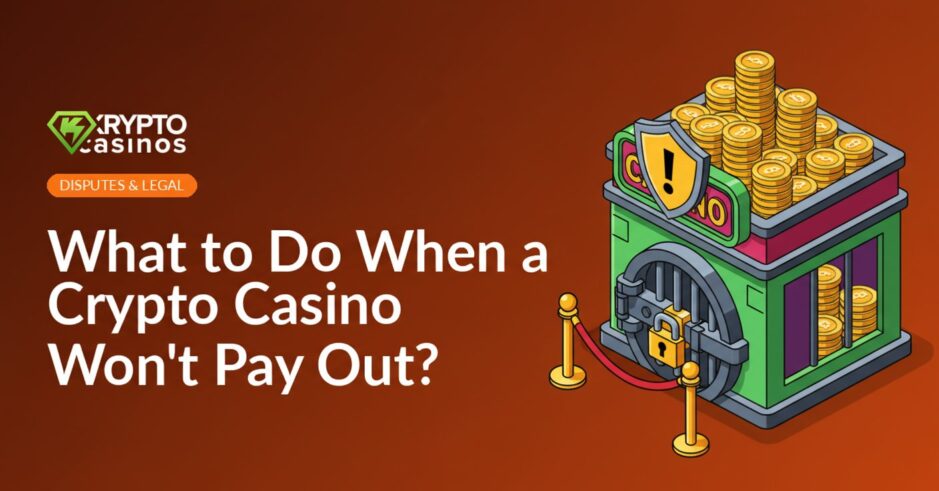
If your withdrawal is blocked, your account is frozen, or support has stopped giving clear answers, this guide explains what to do next.
This page is for situations where a normal delay may have crossed into a real dispute.

 Advertising transparency
 The casino reviews and recommendations on Kryptocasinos.com are independent and transparent. This helps users worldwide make well-informed decisions when choosing the right online crypto casino.
To this end, we research current casino data, process it objectively, and offer users interactive features such as filters and comparison tables. This allows readers to conduct their own research free of charge, compare our content and the casinos, and make their own decisions on this basis.
We may generate revenue when readers register at one of the casinos.
We have imposed strict editorial guidelines on ourselves and explain our testing methods openly and comprehensively. We also communicate transparently how our work is financed. This site may contain tracking links, but this does not influence our objective view in any way.
Reading time: ~ 3 minutes
When a Blocked Withdrawal Becomes a Serious Problem
Once you’ve ruled out that your withdrawal is not being delayed because of legitimate reasons, then you can start getting suspicious.
When the support agent no longer explains what is being reviewed, or repeats the same answers, or maybe even introduces new rules and terms after your withdrawal, your issue is definitely no longer procedural.
Plus, long periods of silence, even vague automatic “manual review” messages, or answers that avoid your actual questions are also warning signs.
The clearest warning sign is being asked to send more money to release a withdrawal. Legitimate casinos will never request additional deposits, fees, or payments once a withdrawal is requested.
If this is the case with your issue, you need to escalate it further.
Not sure which situation you’re in?
If you’re still unsure whether your situation is a dispute or a normal delay, it may help to step back first and review our page on common withdrawal issues at crypto casinos.
What to Do When a Casino Won’t Pay Out
Once a withdrawal delay reaches the escalation stage, it's very important that you continue forward in a calm and calculated manner.
Acting too aggressively or too quickly can lower your chances of resolving the situation, even if the casino is at fault.
-
Step 1: Slow the Situation Down
Avoid any offensive language towards support. Casinos are far less cooperative when things turn hostile, and this can be used against you.
-
Step 2: Document Everything
Take screenshots of: your balance, withdrawal page, transaction IDs, and support chats. Keep it all together in one folder. You might regret not doing this when problems get worse.
-
Step 3: Don’t Send Any More Money
Depositing more money usually makes things worse, not better. If there is already a problem, depositing again can only increase your risk.
-
Step 4: Preserve Your Leverage
Do not close your account or delete any messages. Keep your account active and unchanged unless a regulator or legal professional tells you so.
How to Document and Protect Yourself
As we outlined above, once you consider escalation, documentation will become important.
You need to collect the following:
- screenshots of your account balance and withdrawal status
- transaction hashes (TXIDs) for deposits and withdrawals
- copies of emails and live chat transcripts
- timestamps and URLs where possible
Screenshots with date and page URL are especially useful if the issue is reviewed later by third parties or when you file a complaint against a crypto casino.
Who to Contact When Support Fails
When direct communication doesn't resolve the dispute, here's how to escalate it.
Contact the Casino’s Regulator
Licensed casinos list their regulator in the footer of their sites. Once you know the regulator, you can submit a complaint outlining:
- the issue
- your communication attempts
- supporting evidence
This option can be somewhat slow, but if you're patient enough, regulators can initiate reviews and request resolutions from operators.
Use Independent Player Protection and Dispute Platforms
Some third-party organizations and review platforms can help you with complaint handling or mediation services.
These services can:
- help organize your case
- publicly document unresolved disputes
- apply pressure on operators (sometimes through lowering their rating)
Although they can't guarantee payouts, they can sometimes help move delayed cases forward.
Decide If Legal Help Is Needed
Treat legal action as a last resort, if nothing from above has helped.
This option is most viable when:
- the amount involved is significant
- the casino operates under a recognized license
- you have clear evidence
Make sure you contact a lawyer who is experienced in gambling disputes, as they will be more likely to assess your case properly.
If you’re considering this step, you can read our guide on can you sue a crypto casino and what to expect before moving forward.
Conclusion
Understanding scam risks before you deposit is important. This page is for when that moment has already passed, and things aren’t going the way they should.
Not every delayed withdrawal is a scam. Sometimes it’s just a slow process. But knowing when a normal delay turns into a real problem helps you decide what to do next – without panicking or making things worse.
You don’t need to rush. You just need to take the right next step.
FAQs
Yes, but only if you clearly broke the rules, such as failing KYC, being underage, or playing from a restricted location. But, if a casino refuses to pay without a clear reason or changes its rules after a withdrawal, it’s a big red sign.
Yes. Licensed casinos must pay all valid jackpot wins. If they claim there was a rule violation or technical error, they must prove it, so make sure to ask for proof.
Save all evidence, stop depositing, and report the issue to the casino’s regulator. If the casino ignores you, you use public casino dispute platforms can help escalate the case and warn other players too.
Yes. Licensed casinos are legally required to pay legitimate winnings, if not they can lose their license or receive penalties from the regulator.
Disclaimer: This website is for informational purposes only and does not constitute legal advice. Winnings are not guaranteed. Gambling can be addictive. Only play where legal in your region and check your local laws. Please gamble responsibly. | 18+