Illinois Lawmakers Block Gambling Regulator Merger Over Oversight Concerns
Illinois Lawmakers Block Gambling Regulator Merger – Concerns Over Public Oversight Halt Consolidation Plan
Key Takeaways
- Illinois lawmakers declined to advance Governor JB Pritzker’s proposal to merge the state’s Racing Board and Gaming Board.
- Legislators cited concerns that the plan would reduce public oversight by removing appointed board members and public meetings.
- The Gaming Board currently regulates 16 casinos, more than 49,000 video gaming terminals, and a major sports betting market.
- The proposal could return during the fall veto session, but it did not secure enough support before summer adjournment.
Proposed Merger Would Have Combined Racing and Gaming Oversight
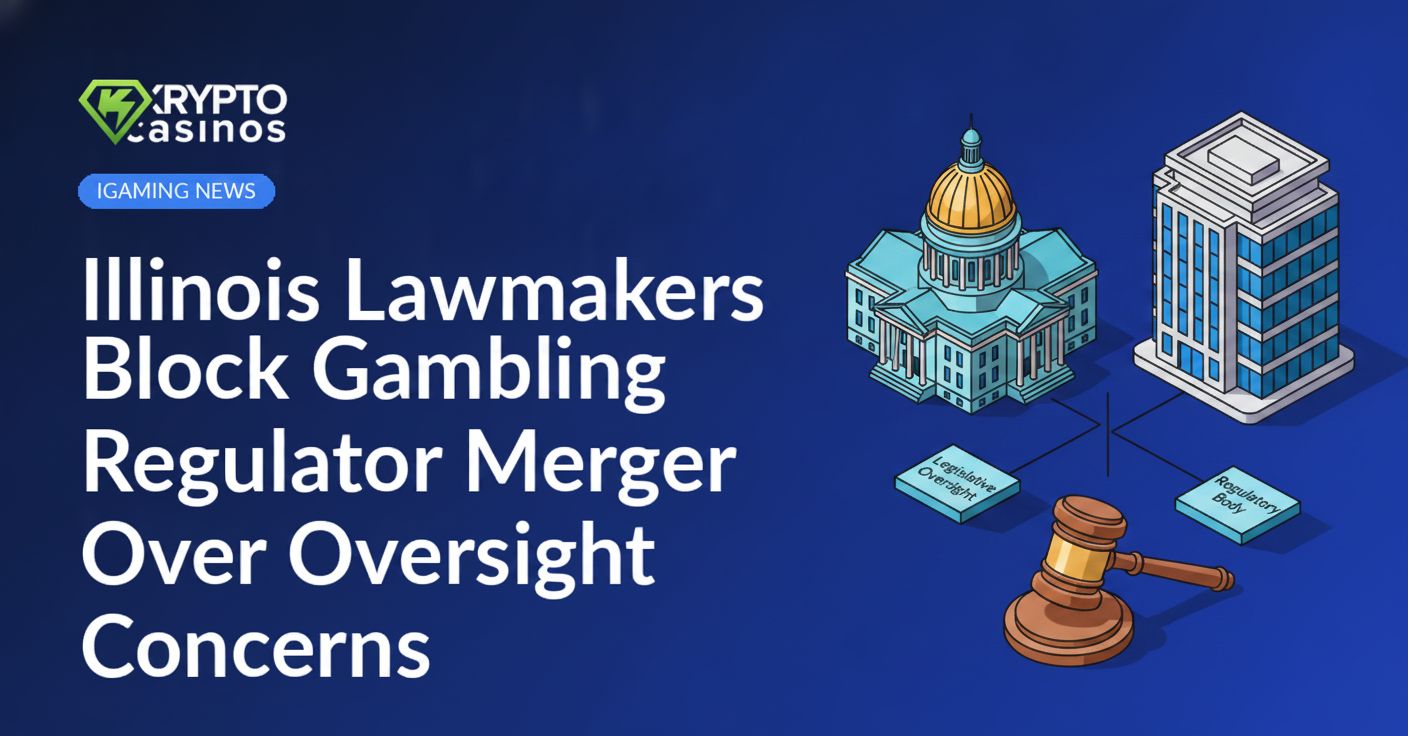
Illinois lawmakers did not approve a plan to consolidate the Illinois Racing Board and the Illinois Gaming Board into a single agency. The proposal, introduced by Governor JB Pritzker, aimed to streamline gambling regulation in a state with an expanding and complex market.
Under the current structure, the Racing Board oversees two horse racing venues, Fairmount Park and Hawthorne Race Course. The Gaming Board has a significantly broader mandate. It regulates 16 casinos, more than 49,000 video gaming terminals, and a major sports betting market.
On paper, consolidation would have placed these responsibilities under one administrative structure. Supporters argued that a unified agency could reduce overlap and ease the burden on an already stretched regulatory system. However, the structural changes raised questions about how regulatory decisions would be reviewed and made visible to the public.
Legislators Cite Loss of Public Meetings and Appointed Boards
The central issue raised by lawmakers was oversight. The proposal would have eliminated the existing appointed board members and the public meetings where licensing, suitability reviews, and disciplinary matters are currently discussed.
State Senator Bill Cunningham said the administration acknowledged the importance of maintaining some form of oversight. However, no agreement was reached on what a replacement structure would look like. According to Cunningham, discussions did not produce a clear alternative that satisfied lawmakers.





House Speaker Emanuel Welch stated there was “no appetite” for the merger. Senate President Don Harmon delivered a similar message. By the time of summer adjournment, the governor did not have the necessary votes to move the proposal forward.
For gambling operators and market participants, the decision means the current regulatory framework remains in place. Licensing decisions, enforcement actions, and disciplinary hearings will continue to be handled through the existing board structure and public meeting format.
Regulatory Scrutiny Heightened by Recent Cases
The debate over transparency took place against a backdrop of recent regulatory controversies involving the Illinois Gaming Board.
One case involved Bally’s Chicago casino and a waste hauling contractor that the FBI linked to organized crime. Another concerned a politically connected banker who received a video gaming license after staff had raised concerns. Gaming administrator Marcus Fruchter did not publicly explain that licensing decision.
These cases increased attention on how licensing and enforcement decisions are made. Lawmakers argued that reducing public forums for such discussions would weaken visibility at a time when the state’s gambling sector is expanding.
Governor Pritzker’s own history with casino investments also drew scrutiny. He previously sold a stake in Grand Victoria Casino in Elgin. Public records show that one or more trusts benefiting him once held casino interests in Indiana and the Niagara Falls area. His office has not fully detailed those holdings.
In addition, Welch and Harmon operate in a political environment where gambling companies are active donors. Since 2019, they have received more than 500,000 dollars combined from Accel Entertainment, a video gambling company. The role of industry contributions added further focus on the importance of open meetings and transparent regulatory processes.
Illinois Gambling Market Continues to Expand
The failed merger comes as Illinois manages a broad and evolving gambling agenda. Video gambling continues to grow, and the sports betting market now carries taxes of up to 40 percent plus a per wager fee.
At the same time, disputes over prediction markets are ongoing in federal court. Online casino legalization also remains under discussion, with Attorney General Kwame Raoul indicating that such legislation appears likely at some point.
For operators and users, the scale of Illinois gambling regulation is significant. The Gaming Board’s supervision of tens of thousands of terminals and multiple casino properties makes it one of the central regulatory bodies in the state’s entertainment and betting sector. Any structural change would have affected licensing procedures, compliance reviews, and potentially the speed of regulatory decisions.
The proposal could return during the fall veto session. However, the governor also faces a third term campaign in November, and lawmakers signaled that they would not accelerate changes to gambling governance without more detailed safeguards.
Our Assessment
Illinois lawmakers chose to maintain the existing separation between the Racing Board and the Gaming Board after concluding that the proposed merger did not provide sufficient guarantees of public oversight. The decision preserves the current system of appointed board members and open meetings for licensing and enforcement matters. As Illinois continues to oversee a large casino, video gaming, and sports betting market, regulatory transparency remains a central issue in the state’s gambling policy framework.
We have imposed strict editorial guidelines on ourselves and explain our testing methods openly and comprehensively. We also communicate transparently how our work is financed. This site may contain tracking links, but this does not influence our objective view in any way.