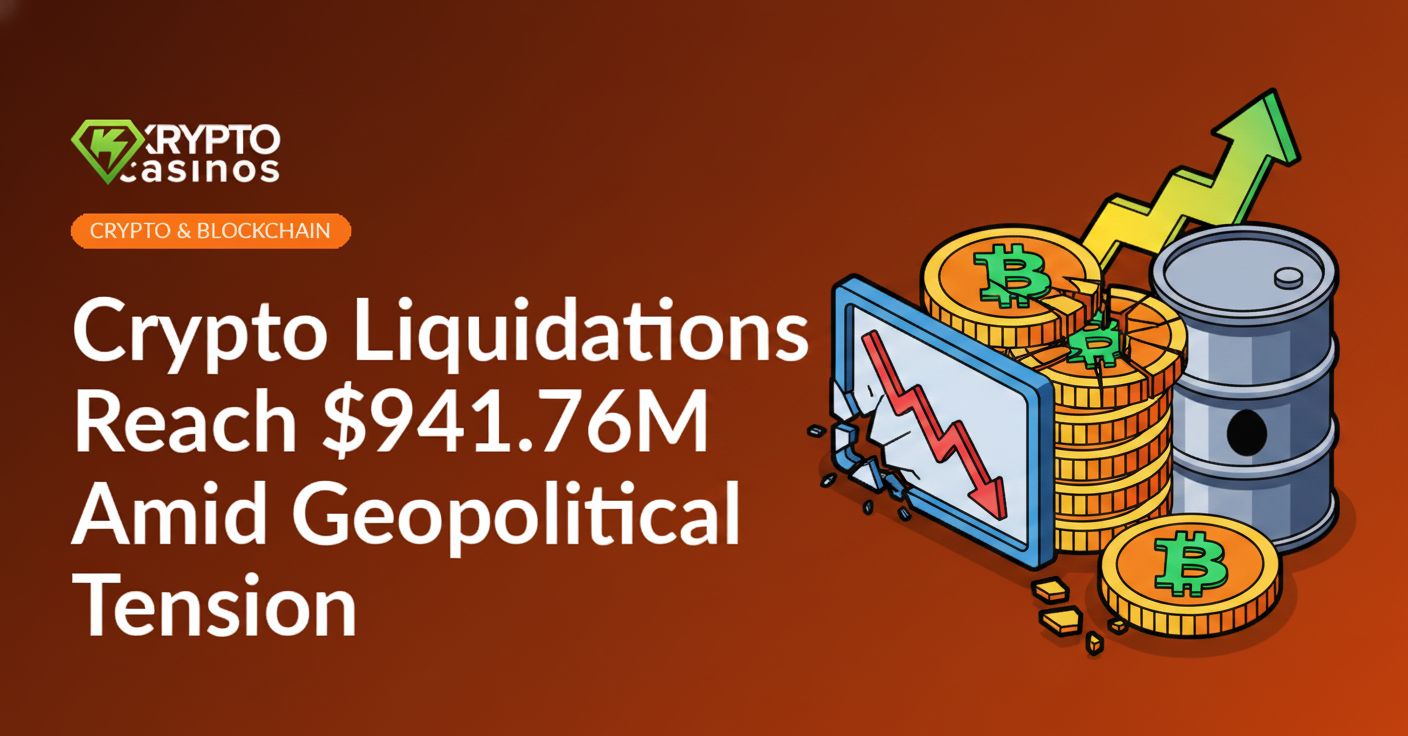
Crypto Liquidations Reach $941.76M Amid Geopolitical Tension
Crypto Liquidations Hit $941.76 Million in 24 Hours – Geopolitical Tensions and Oil Prices Weigh on Markets
Key Takeaways
- Crypto liquidations reached $941.76 million within 24 hours, with $871.44 million from long positions.
- Bitcoin fell about 5.6 percent over the past week amid rising geopolitical tensions.
- Bitcoin ETFs recorded nearly $1.26 billion in weekly outflows, while Ethereum ETFs saw $215 million in outflows.
- Brent crude oil climbed toward the $103 to $105 range, increasing pressure on liquidity sensitive assets.
Geopolitical Tensions Trigger Defensive Positioning Across Crypto Markets
Geopolitical uncertainty intensified after Iran warned Washington against challenging its national rights during ongoing nuclear negotiations. At the same time, traders began factoring in the risk of stronger sanctions and broader regional instability.
This shift in sentiment led to more defensive positioning across global markets. Within the crypto sector, Bitcoin declined by roughly 5.6 percent over the past week. Ethereum and a broad range of altcoins also weakened as uncertainty increased.
The pressure reflected growing concerns about stricter anti money laundering enforcement and heavier scrutiny of offshore crypto liquidity venues. These factors contributed to reduced risk appetite and heightened volatility across digital asset markets.
Oil Prices Add to Liquidity Pressure
The geopolitical backdrop coincided with rising oil prices. Earlier fears of sanctions and stalled negotiations between the United States and Iran had already affected market sentiment. As supply disruption concerns intensified, Brent crude climbed toward the $103 to $105 range.
Higher oil prices increased inflation concerns and weighed on liquidity sensitive assets such as cryptocurrencies and technology equities. During periods of escalating geopolitical stress, both Bitcoin and Ethereum experienced sharper price swings.





Ethereum showed greater vulnerability during these episodes. Higher beta assets tend to weaken more rapidly when global liquidity conditions tighten. Bitcoin, while also affected, demonstrated comparatively stronger stability near key support levels despite broader macro sensitivity.
The overall pattern indicates that crypto markets remain closely linked to geopolitical developments and shifts in global liquidity conditions.
Nearly $942 Million in Liquidations Within 24 Hours
As volatility increased, leveraged positions in crypto derivatives markets faced significant stress. According to liquidation data, nearly $941.76 million was erased across crypto markets in a single 24 hour period.
Long positions accounted for approximately $871.44 million of those losses. In contrast, short liquidations totaled about $70.31 million. The imbalance highlights how heavily traders had positioned for upward price movements prior to the downturn.
When market momentum weakened under macroeconomic pressure, these bullish positions were unwound rapidly. The scale of long liquidations indicates that leverage played a central role in amplifying price swings during the period of geopolitical stress.
Despite the wave of liquidations, Bitcoin continued to stabilize near major support regions. However, the data underscores how quickly leveraged exposure can translate into cascading losses when external shocks affect sentiment and liquidity.
ETF Flows Reflect Cautious Institutional Sentiment
Institutional flows also reflected a more defensive stance. Bitcoin exchange traded funds recorded nearly $1.26 billion in weekly outflows. Ethereum ETFs experienced outflows of around $215 million during the same period.
At the same time, products linked to Solana and Ripple attracted selective inflows. This divergence suggests that investors reduced overall exposure without fully exiting the crypto market. Instead, capital appeared to rotate selectively within the sector.
The combination of ETF outflows and derivatives liquidations shows that both institutional and leveraged participants responded to the same macro signals. Tighter liquidity conditions and geopolitical risks contributed to reduced exposure and portfolio adjustments.
Broader Implications for Crypto Market Participants
The recent developments illustrate how macroeconomic and geopolitical factors continue to influence digital asset markets. Rising oil prices, sanctions concerns, and nuclear negotiation tensions all coincided with increased volatility in cryptocurrencies.
For traders using leverage, the liquidation data demonstrates the speed at which positions can be forced closed during periods of market stress. For longer term participants, ETF flow data highlights how institutional sentiment can shift in response to broader economic uncertainty.
The disparity between large long liquidations and comparatively small short liquidations shows that bullish positioning had been dominant prior to the downturn. When liquidity conditions tightened, this imbalance accelerated price declines.
Our Assessment
The reported $941.76 million in 24 hour liquidations, combined with significant ETF outflows and rising oil prices, shows that crypto markets reacted strongly to geopolitical tensions and tightening liquidity conditions. Bitcoin, Ethereum, and broader altcoins experienced pressure, while leveraged long positions absorbed most of the losses. At the same time, selective inflows into Solana and Ripple products indicate that investor participation continued, though with reduced overall risk exposure. The data confirms that crypto markets remain sensitive to macroeconomic and geopolitical developments that influence global liquidity.
We have imposed strict editorial guidelines on ourselves and explain our testing methods openly and comprehensively. We also communicate transparently how our work is financed. This site may contain tracking links, but this does not influence our objective view in any way.